How Dancing Cows Went from Trend to Tradition
Adam Suffoletto
Professor Ristow
WRRH 333
2 April 2026
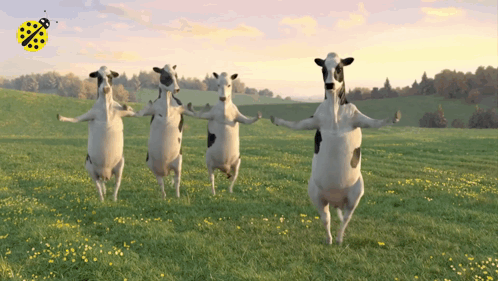
The dancing cows that show up on TikTok on the first of every month look like nothing at first, and most people probably do not think twice about them when they scroll on to the next dumb video. It is usually the same kind of video every time, with cows dancing around in a loop and the same audio playing over it again and again. The videos aren’t super high quality, they’re extremely repetitive, and they aren’t trying to be any more impressive than the month before. It feels repetitive, predictable, and pretty dumb if you look at it on the surface without thinking about it deeply. But that is exactly why the trend works, because it does not ask anything from the people who see it or the people who post it. What looks like a random joke is actually a small example of how people act online, how platforms push content, and how something simple can turn into a shared “tradition” without anyone being in charge of it.
The trend itself is very simple, which is a big reason why it spreads so easily across so many people. On the first day of each month, users on TikTok post videos of dancing cows, and those videos look almost identical to ones that have already been posted before. A lot of people don’t bother changing anything, and they just repost the same clip that has already been circulating. Some people might make small edits, but those edits usually do not change anything important about the video. The audio is almost always the same, where a man blares out “Wake up! It’s the first of the month,” which makes it easy for viewers to recognize what they are watching right away. After that, there’s usually a tune that makes someone bop their head up and down. Puts a smile on their face, if you will. There is no confusion and no need to explain anything, because the format is already understood. That lack of originality is not a problem for the trend, and it is actually one of the main reasons it’s still going on.
The biggest factor here is how easy it is to take part in the trend, because there is almost no effort required to join in. A lot of trends fail because they ask too much from people, whether that means editing a video, coming up with a new idea, or putting in time to make something stand out. Most people are not going to do that, especially on an app where they are just trying to doom-scroll and chill out. The dancing cows trend removes all of those barriers and replaces them with something that takes literally no thought at all. All someone has to do is notice that it is the first of the month and decide to post a video. That level of simplicity makes the trend easy to copy, and when something is easy to copy, it spreads much faster and reaches a lot more people. There is also something important about the timing of the trend, because it is not random and it does not happen at unpredictable moments. The videos only really make sense on the first day of the month, which gives the trend a clear identity that can repeat over time. People start to expect it, even if they are not thinking about it ahead of time, and that expectation plays a big role in keeping it alive. Some of the videos even include an AI cow saying, “It’s not a trend, it’s a tradition.” It turns into a small event that happens every month, and even though nobody is organizing it, it still feels organized in a way. That is different from most trends, which usually appear out of nowhere and then disappear just as quickly without any kind of pattern. Some users have even commented, “This is how I learned it’s a new month.” Something about that just makes me laugh.
When you look at it that way, the trend starts to feel less like a joke and more like a tradition that people participate in without really thinking about it. A tradition does not have to be serious or meaningful in a traditional way, because it can just be something that people repeat at a certain time that creates a shared experience. That is exactly what is happening with the dancing cows, because people across the app are all posting the same kind of content at the same time.
The fact that the trend uses cows does not really matter, and that is another reason why it works so well. It could have been any animal or any random object, and the outcome would probably be the same as long as the format stayed simple. The meaning does not come from the cows themselves, and it comes from the repetition and the timing of the posts. People are not posting because they care about cows, and they are posting because they recognize the pattern and want to be part of it. That recognition is what allows the trend to keep going, because it makes it easy for new people to understand what is happening without needing any explanation. I mean, some of these videos get like twenty million likes. That’s just insane on any platform for any video, let alone one of a dancing cow.
TikTok plays a big role in keeping this trend alive, even if people do not always realize it. The platform is built to push content that people recognize quickly and engage with right away, and familiar formats tend to perform better because they do not require much thought. When someone sees a dancing cow video on the first of the month, they understand it immediately, which makes them more likely to watch it and interact with it. That quick reaction is important because it tells the platform that the content is worth showing to more people. The more people who see it, the more the trend continues to grow. The platform also creates a kind of loop that keeps the trend going month after month. People post these videos because they know they will probably get engagement, and the platform gives them that engagement because it has already seen that the format works. That cycle repeats itself every time the first of the month comes around, and it allows the trend to continue without needing anything new or creative to be added. It might feel natural when you see it happening, but it is actually being supported by the way the platform is designed.
Another reason the trend spreads so easily is that it is completely safe for people to take part in, and that matters more than it seems at first. A lot of content online carries some level of risk, even if it is small. When people post opinions, they open themselves up to disagreement. When they post something personal, they risk being judged or embarrassed. Even something meant to be funny can fall flat or get picked apart. This trend cuts through all of that. There is nothing to debate, nothing to critique, and nothing to misunderstand. It is just a dancing cow on a specific day. That simplicity lowers the barrier to entry to almost zero, which makes participation feel easy and low stakes.
Because of that, it pulls in people who would normally stay on the sidelines. Not everyone wants to build a brand or share strong opinions online. Most people just want to exist on the platform without drawing attention to themselves. This trend gives them a way to do that while still feeling involved. You are simply repeating the same thing at the same time as everyone else. That makes it feel less like posting and more like following a routine, which is a much easier ask. The humor behind it also plays a big role, but it is not the kind of humor that depends on originality or skill. The joke is simple and almost empty on purpose. It comes from repetition and from the fact that everyone already knows what is coming. When the first of the month hits, people expect to see the same thing again. That predictability becomes part of the appeal. It is not funny because the content is clever. It is funny because it is not clever at all, and it keeps happening anyway. The more it repeats, the more it reinforces itself. At a certain point, the humor shifts away from the cows entirely. People are not reacting to the video itself as much as they are reacting to the pattern. They are laughing at the fact that this has become a thing that people keep doing without questioning it.
Over time, that pattern becomes self sustaining. People come back not because the content improves or evolves, but because the routine stays the same. There is comfort in knowing what will show up and when. There is also a small incentive to keep participating, because missing it means stepping out of that shared moment. The cost of posting is low, the risk is almost nonexistent, and the reward is a quick feeling of inclusion.
Some people might look at this trend and say that it is completely meaningless and not worth paying attention to, because it does not create anything valuable and does not require any effort. That is not entirely wrong, but it misses the bigger picture of what is actually happening. The content itself might not matter, but the behavior behind it does, because it shows how people form patterns and routines online. It also shows how platforms can shape those patterns by pushing certain types of content and rewarding certain kinds of behavior.
So anyway, the dancing cows trend shows that people do not need something complex or impressive to create a shared experience online. The combination of low effort, clear timing, and platform support allows the trend to repeat itself without losing relevance, and it turns into something random into something that feels almost structured. It may look like a joke, but it reflects how social media works and how people find ways to connect, even if that connection is built around something as simple and stupid as a dancing cow showing up on the first day of the month.